





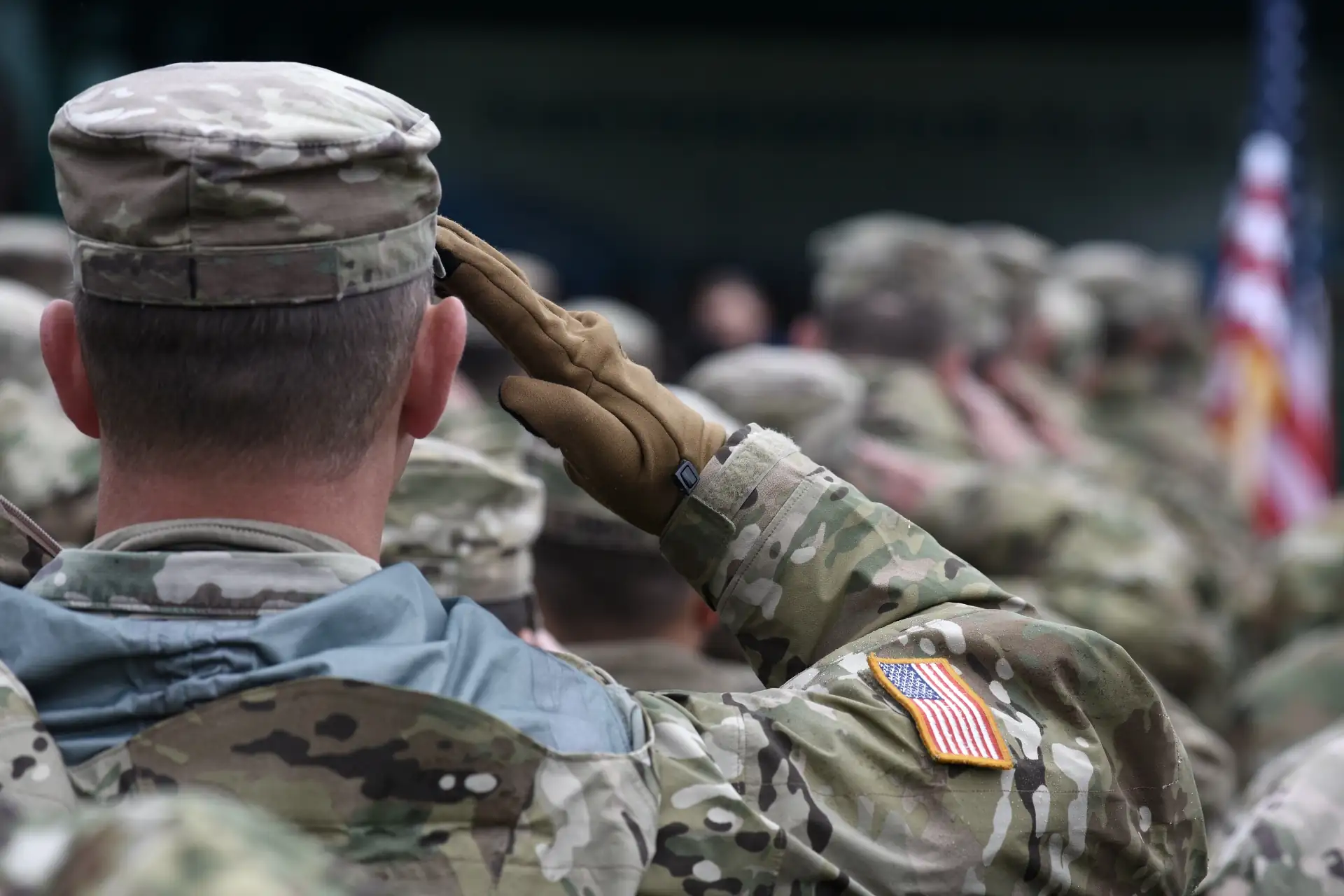
LASIK is a laser eye surgery that reshapes the cornea to correct nearsightedness, farsightedness, and astigmatism, eliminating the need for glasses or contacts. If you are stationed at Peterson SFB, Fort Carson, studying at the Air Force Academy, or transitioning out of service in the Colorado Springs and Pueblo area, your vision needs are different from a typical patient’s. Glasses and contacts are a real liability in a military environment, not a mere inconvenience. They can affect your career trajectory, your deployability, and your quality of life.
The Department of Defense not only allows LASIK for active duty service members. It actively encourages it. Refractive surgery has been performed on more than 350,000 service members through the military’s Warfighter Refractive Eye Surgery Program, with strong outcomes data behind it.
This guide covers Air Force Academy and Fort Carson eligibility policies, what your deployment timeline looks like after surgery, and why working with a surgeon who has worn the uniform can make a meaningful difference.
Why LASIK Matters More in a Military Environment
Glasses and contact lenses are manageable inconveniences in civilian life. In a military environment, they can be serious liabilities.
Consider the scenarios service members actually face:
- Glasses fog in high-humidity environments or with body armor and helmets, or shatter under impact
- Contacts carry infection risk in field conditions, where hygiene protocols are difficult to maintain
- Night vision goggles (NVGs) are harder to use effectively while wearing glasses
- An enemy can take your glasses, a well-documented vulnerability in captivity situations
- High-altitude operations, airborne jumps, and combat diving all create environments where corrective lenses fail you at the worst possible moment
LASIK permanently reshapes your cornea so light focuses correctly on your retina. No lenses required. For the active duty service member or veteran who needs vision that works in any condition, LASIK is a valuable investment in your career and your life.
Benefits of LASIK for Service Members
Whether you are an Airmen or Guardian at Peterson Space Force Base, a soldier at Fort Carson, or a cadet preparing for life after USAFA, LASIK delivers real operational and quality-of-life advantages:
- Improved visual acuity: nearly 95% of military patients reach 20/20 or better, reported by the Army’s refractive surgery program
- Elimination of corrective lens dependency: no spare glasses to carry, no contact solution to pack on deployment
- Enhanced night vision and low-light performance: particularly relevant for night operations, NVG use, and aviation duties
- Expanded career options: vision correction can open doors to pilot training, Special Forces selection, and other competitive specialties
- Faster return to peak performance: LASIK recovery is measured in days, not weeks, which matters for service members who cannot afford extended downtime
- Reduced logistical burden: fewer consumables to track and supply in the field
Branch-Specific Policies: What Fort Carson and USAFA Members Need to Know
Every branch of the military approves laser vision correction, but each has its own standards. Here is what matters most for the Colorado Springs military community.
Air Force and USAFA Standards
The Air Force was among the first military branches to formally embrace LASIK, and it now allows both LASIK and PRK for most career fields, including many flight positions. For rated positions (pilots and navigators), command approval and thorough pre-operative and post-operative evaluations are required. Some aviation communities specify femtosecond laser flap creation and maintain stricter prescription thresholds than non-rated career fields.
For USAFA cadets and recent graduates, timing matters. If you are approaching a rated career path, discuss your procedure selection, LASIK versus PRK, with your flight surgeon before proceeding. Ejection-seat platforms sometimes require longer observation periods post-surgery, and some aviation communities prefer PRK due to the absence of a corneal flap.
Annual vision checks are standard to ensure stability throughout your flying career.
Army and Fort Carson Considerations
Fort Carson soldiers can access LASIK and PRK through the Warfighter Refractive Eye Surgery Program (WRESP), which operates at military treatment facilities. If you had civilian LASIK before enlisting or before a PCS move, the Army will review your surgical records, current vision status, and documentation of any complications.
Complete healing and a documented stability period are required before unrestricted duty status is restored, generally six months post-surgery under Army medical fitness standards (AR 40-501). High-priority access under WRESP goes to combat arms and front-line soldiers first, but all active duty personnel are eligible.
For Army Special Forces and airborne-qualified soldiers, PRK is often preferred over LASIK because it does not create a corneal flap that could theoretically be dislodged during high-impact activities or hand-to-hand combat.
Navy, Marine Corps, and Other Branches
The Navy and Marine Corps share similar standards. Aviation communities maintain especially detailed protocols, and Marine Corps infantry often require or strongly prefer PRK. The Coast Guard and Space Force have adopted policies closely aligned with the Navy and Air Force respectively, with laser vision correction permitted for most specialties.
LASIK vs. PRK: Choosing the Right Procedure for Your Role
This is one of the most important decisions a military member can make, and it is different for every service member.
LASIK creates a thin corneal flap, reshapes the tissue beneath it, and repositions the flap. Recovery is fast. Most service members notice dramatically improved vision within 24 hours and return to light administrative duties within days.
PRK reshapes the corneal surface directly without creating a flap. Recovery takes longer, typically one to two weeks before vision fully clears, but it eliminates any flap-related risk entirely. This makes PRK the standard of care for:
- Special Operations Forces
- Combat divers and HALO-qualified personnel
- Marine Corps infantry
- Aircrew in ejection-seat platforms
- Service members with thinner corneas
Both procedures deliver identical long-term outcomes. Your surgeon will recommend the right one based on your corneal thickness, prescription, anatomy, and the specific demands of your MOS or AFSC.
EVO ICL™, which uses Collamer™ lens technology, is also available and may be appropriate for service members with higher prescriptions who do not qualify for LASIK or PRK. Dr. Neuffer offers this procedure, and we have provided ICL correction to military personnel.
Q&A With Dr. Marc Neuffer, MD, FACS: Air Force Surgeon and Skyline LASIK Surgeon
Dr. Marc Neuffer, MD, FACS, is more than a board-certified ophthalmologist. He recently served as Chief of Cornea and Refractive Surgery at Air Force Academy Hospital in Colorado Springs and has spent his career performing refractive surgery on active duty Air Force personnel. He has received the U.S. Air Force Meritorious Service Medal and the Afghanistan Campaign Medal, and has performed over 16,000 vision correction procedures.
We asked Dr. Neuffer two questions that matter most to the USAFA and Fort Carson community.
What are the potential risks and benefits of LASIK for military personnel, and how do they compare it to other vision correction options?
Dr. Neuffer: “The benefits for military personnel are huge, not only quality-of-life benefits but operational ones. Eliminating dependence on glasses or contacts removes real vulnerability in the field. Standard glasses can easily break and could take weeks to replace downrange. Contact lenses are discouraged because they often lead to eye infections in dusty austere environments. Inserts for ballistic eye protection or gas masks are cumbersome, restrict peripheral vision, and can severely compromise tactical effectiveness. Finally, if service members are captured, one of the first actions the enemy takes is removing their glasses to prevent them from escaping. LASIK allows personnel to focus entirely on the mission without worrying about problems from glasses and contacts.
Almost all my active-duty patients achieve 20/20 vision or better. That level of uncorrected vision opens doors and allows them to do their job in ways that were not available to them before. That said, LASIK is still a surgical procedure, so I discuss the risks candidly with every patient. The most common side effect is temporary dry eyes, which typically resolve within a few months. More rarely, patients experience halos or glare at night, something I evaluate carefully in anyone who will be using night vision devices. The risk of serious complications is low, but it’s not zero, and I want to make sure patients understand both sides of the equation.
LASIK isn’t the only option nowadays either. For service members with thin corneas, or those in high-impact specialties, PRK is often the preferred choice. The outcomes are the same, but without a flap, there is no flap-related risk in a combat environment. Another option is the implantable contact lens, EVO ICL™. It is a powerful alternative to PRK and LASIK that does not remove corneal tissue at all. The key is getting a thorough evaluation first to know all your options.
What can the impact on deployment be?
Dr. Neuffer: “This is probably the question I get asked most often from active-duty patients, and it’s the right one to ask. The short answer is plan ahead, and don’t schedule surgery right before deployment or a major training event.
After LASIK, full combat training clearance typically takes four to six weeks. After PRK, we usually look at three to six months of documented post-operative visual stability, and some commands extend that longer for austere environments where access to eye care is limited. Aviation personnel also often require three to six months depending on how long their vision takes to stabilize and clearance from their flight doctor.
None of this is a reason to avoid the procedure. It is a reason to time it strategically. A PCS move, a gap between training cycles, or a period well before a deployment block are all ideal windows. I work closely with my patients and their chains of command to find that timing. When you deploy post-LASIK, your vision functions normally in virtually all environments. The main management consideration is dry eye. Desert and austere conditions can worsen dryness, so I always instruct patients to strictly follow our post-operative protocol, including the regular use of preservative-free artificial tears. That’s a small price to pay for the freedom of not having to worry about glasses in a firefight.”
Eligibility: Are You a Good Candidate?
Whether you are active duty, a veteran, or a family member of someone stationed in Colorado Springs, LASIK candidacy involves several consistent criteria:
- Age: At least 18 years old; many military programs prefer 19-21+ with documented stability
- Stable prescription: No significant change in the past 12 months (ideally longer)
- Corneal health: Adequate thickness, no signs of keratoconus or irregular topography
- Eye health: No active infection, uncontrolled glaucoma, or severe dry eye
- General health: No autoimmune conditions that interfere with healing; no recent isotretinoin use
Take the LASIK Candidacy Quiz to see where you stand, or read on for what our comprehensive pre-operative evaluation covers.
Our comprehensive pre-operative evaluation will assess all of these factors. If you don’t qualify for LASIK, we’ll identify whether PRK or EVO ICL™ is the right path for you.
Investment and TRICARE Coverage
LASIK is considered an elective procedure by TRICARE and is not covered by standard military insurance. Active duty service members may receive LASIK at no cost through military treatment facilities under WRESP, though space is limited and prioritized by readiness needs.
For veterans, military dependents, and service members who prefer a civilian provider or face long wait times at MTFs, we offer:
- Transparent, all-inclusive investment: no hidden fees or bait-and-switch technology tiers
- Flexible 0% interest financing through CareCredit and other options
- HSA/FSA-eligible procedures
We understand what military service means, and we believe your vision care should reflect the standard you have held yourself to.
Recovery and Return to Duty: What to Expect
After LASIK:
- Vision improves dramatically within 24 hours for most patients
- Light administrative duties can resume within a few days
- Physical training, heavy lifting, and contact sports: restricted for 1–2 weeks
- Swimming and field environments: avoid for 2 weeks
- Deployment eligibility: generally requires a documented stability period of three to six months, per Army medical fitness standards (AR 40-501)
After PRK:
- Vision clears fully over 1–2 weeks
- Longer activity restrictions, with surface healing complete around 3 months
- Deployment clearance: generally three to six months, sometimes extended for specific roles, per Army medical fitness standards (AR 40-501)
Throughout recovery, protective eyewear is non-negotiable, especially in dusty, windy Colorado environments.
Veterans: Your Path to Clear Vision After Service
If you have separated or retired from the military, LASIK remains a strong option worth considering. The VA does not typically cover LASIK as an elective procedure, though exceptions exist for service-connected vision injuries or corneal conditions requiring medical necessity documentation.
For most veterans, the civilian path is the most practical option: a comprehensive evaluation with our team, financing that fits your budget, and a surgeon who understands what you have done and what you need going forward.
Why Skyline LASIK for Colorado Springs and Pueblo Military and Veterans
Located minutes from Fort Carson, Peterson Space Force Base, and the United States Air Force Academy, we are uniquely positioned to serve the Colorado Springs and Pueblo military community.
- Dr. Marc Neuffer, MD, FACS: Air Force veteran surgeon, recipient of the U.S. Air Force Meritorious Service Medal, and former Chief of Cornea and Refractive Surgery at Air Force Academy Hospital, with 16,000+ procedures performed
- WaveLight® PLUS Ray Tracing LASIK, the first in Colorado, built for personalized outcomes
- PRK and EVO ICL™: full procedure range to match every candidacy profile and military role
- Straightforward investment options and flexible financing, because your service already cost enough
Frequently Asked Questions
Can I have LASIK and still enlist in the military?
Yes. You can enlist or commission after LASIK as long as your surgery was successful, your vision meets the standards for your desired career field, and you provide complete surgical records. A waiting period of three to six months for healing and prescription stability is typically required before shipping to basic training or OCS.
Will LASIK disqualify me from a pilot slot or Special Forces selection?
Not necessarily, but procedure selection matters. The Air Force, Army, and Navy all accept laser vision correction for aviation and special operations roles. PRK is often preferred or required for the highest-risk specialties due to the absence of a corneal flap. Your flight surgeon or special operations medical officer will have final approval authority.
How long after LASIK before I can deploy?
Deployment eligibility generally requires three to six months of documented post-operative stability, per Army medical fitness standards. PRK patients typically need the longer end of that range. Always coordinate timing with your chain of command.
Can veterans use VA benefits for LASIK?
The VA generally does not cover LASIK as an elective procedure. Exceptions exist for service-connected eye injuries or conditions where LASIK is deemed medically necessary. Many veterans pursue civilian LASIK with financing options or HSA/FSA funds.
What if my prescription changes after LASIK?
Enhancement procedures can often restore clear vision if your corneas retain adequate thickness and your eye health is otherwise good. This is reviewed on an individual basis and is covered under our post-operative care policy.
Ready to Schedule Your Complimentary Consultation?
Whether you are preparing for a deployment, planning your next career step at USAFA, transitioning out of Peterson SFB, Fort Carson, or ready to stop carrying glasses through the Colorado mountains, your vision deserves the same high standard you bring to everything else.
We are here when you are ready. Schedule your complimentary consultation today.
Source Index
My Army Benefits (Official U.S. Army Website). “Military Laser Eye Surgery: Enhancing Vision Readiness.” myarmybenefits.us.army.mil
U.S. Department of the Army. “Army Regulation 40-501: Standards of Medical Fitness.” dmna.ny.gov (official Army regulation text)
